
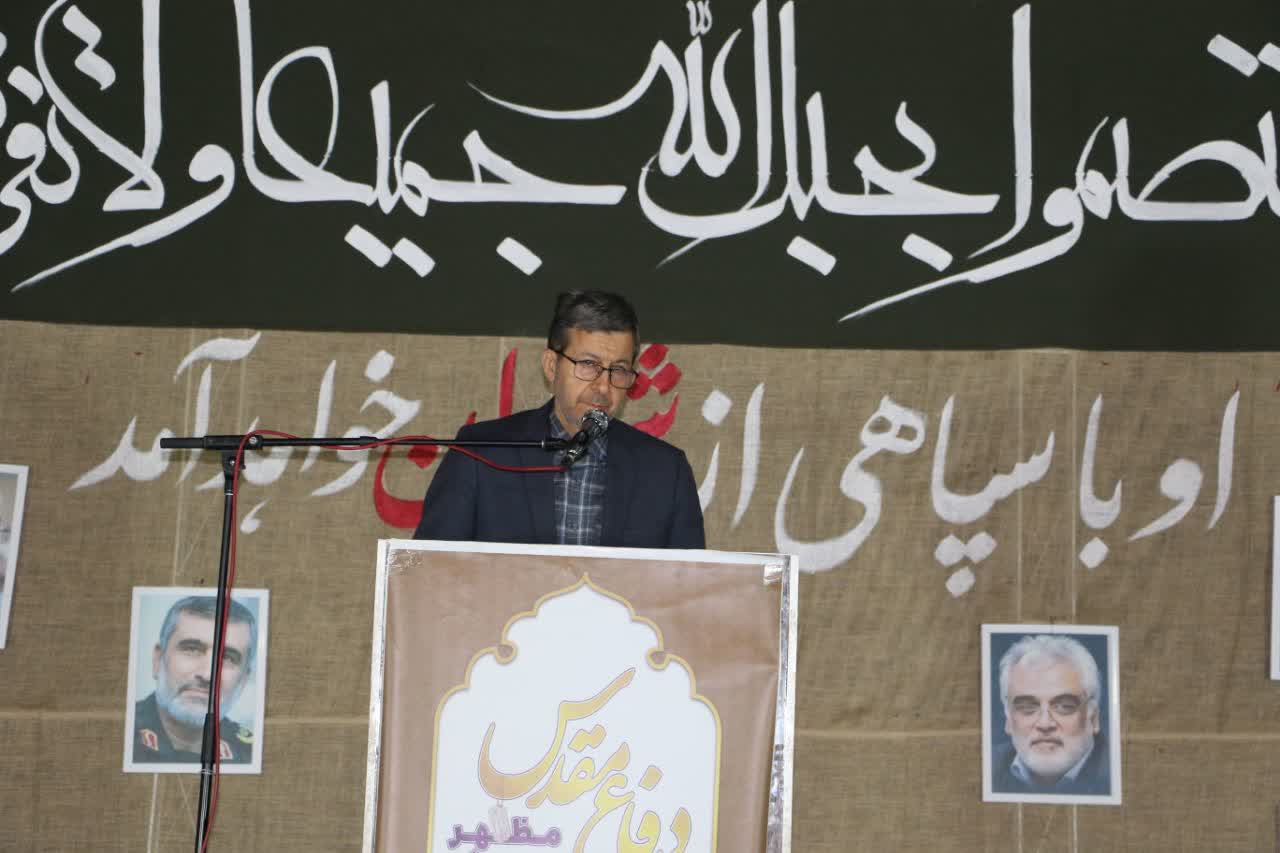
The commemoration ceremony for 1,460 “frontline martyrs” of Falavarjan County was held at Shahid Beheshti National Camp in Abrisham city, coinciding with Sacred Defense Week. The event brought together Isfahan Governor Dr. Mehdi Jamalinejad, local officials, families of martyrs, and a large number of residents.
Speaking at the ceremony, Jamalinejad emphasized the significance of this spiritual gathering:
“Today, we have come together in a luminous setting to renew our covenant with the ideals of the martyrs and to remain faithful to the pledge they sealed with their blood.”
He described Falavarjan as “a land of steadfast spirits and passionate hearts,” adding:
“This region is a reminder of the love and sacrifice of men who shaped history. Falavarjan is a garden of tulips watered by blood, and the names of its noble martyrs will forever shine in the epics of the Sacred Defense.”
The governor noted that the martyrs’ sacrifice had nourished the tree of the Islamic Revolution, stressing:
“The glorious path carved by the heroes of this land must be the beacon for our future, as their names remain engraved in the chronicles of history.”
Highlighting the importance of multidimensional storytelling about the Iran-Iraq war, Jamalinejad said:
“We must not confine the Sacred Defense to numbers and clichés. It is vital to convey personal, emotional, and human stories so that younger generations recognize the martyrs not only as battlefield heroes but also as individuals with feelings, concerns, and aspirations.”
He further underlined that the martyrs’ ideals transcend the battlefield:
“Their legacy continues in today’s struggles — scientific efforts for self-sufficiency, social sacrifice in serving the underprivileged, combating corruption, and resisting global arrogance through domestic progress. Martyrs must be introduced as role models for meaningful lives, not merely as symbols of martyrdom.”
Jamalinejad pointed to the importance of utilizing modern technology and digital platforms to connect youth with the culture of resistance:
“Producing engaging content such as short films, motion graphics, podcasts, and using virtual and augmented reality to recreate epic scenes, along with developing apps and games that indirectly convey the values of sacrifice and resilience, are among the province’s key cultural programs.”
He also emphasized the role of young people in sustaining this legacy:
“Youth should be the idea-generators and implementers. Forming student research groups on anonymous martyrs and improving the quality of ‘Rahian-e Noor’ cultural trips through open dialogue will deepen the influence of the martyrs’ message among the new generation.”
The governor stressed the vital role of the martyrs’ families, concluding:
“The memory of martyrs endures if we show that their ideals pave the way for a better life today. Properly fostering this connection ensures that their remembrance becomes not only preserved but also a guiding light for present and future generations.”
The ceremony featured participation from the families of martyrs, including the mother of Shahid Memarian, war veteran Mehdi Tahanian, eulogist Haj Mehdi Mansouri, and host Rahman Nezam-Islami. Families of martyrs Torjizadeh and Ajmian attended as special guests.
The spiritual gathering, filled with remembrance of 1,460 frontline martyrs of Falavarjan, reaffirmed the importance of continuing their path and transmitting the culture of sacrifice and resistance to younger generations.